Excavation and plumbing contractors have a problem most other trades don't: the work is mostly underground. A finished sewer line, gas run, or French drain is buried. A homeowner can't drive past a job site and see how good your work is. So when they search for someone to dig up their yard, your website is often the only evidence they've got.
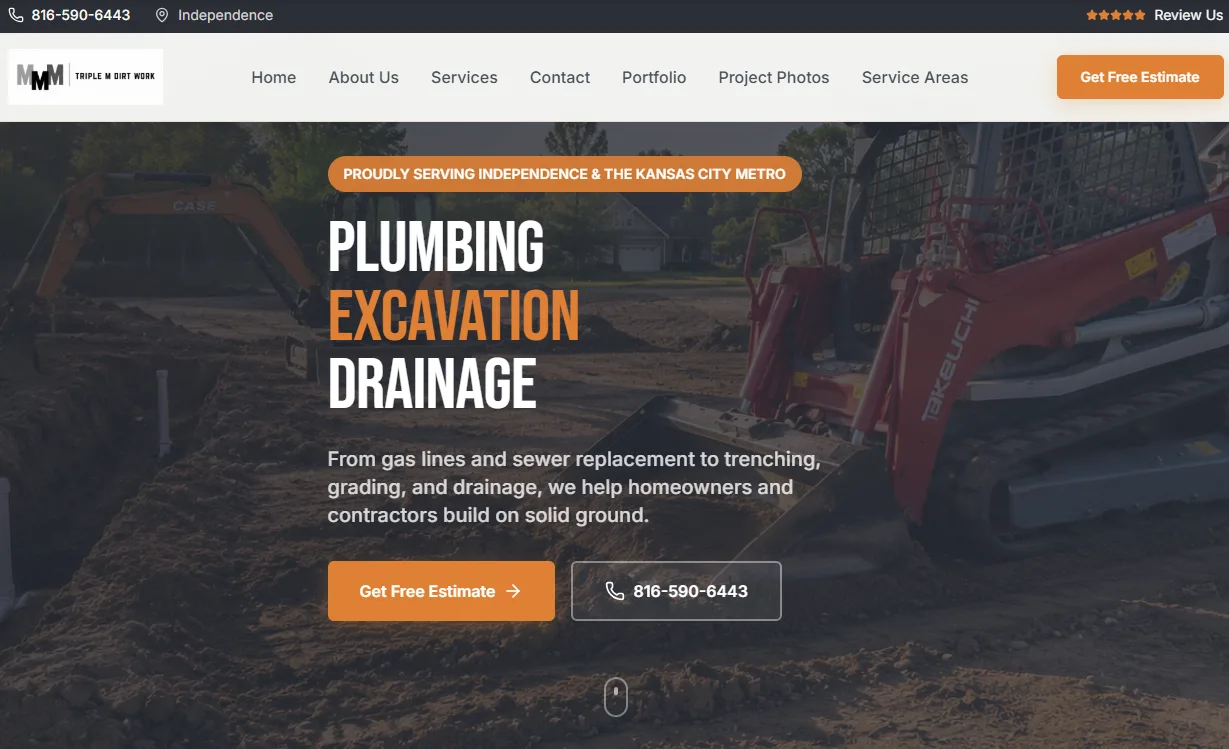
Here's what a dirt-and-pipe contractor's website needs to win that job, using the new site we built for Triple M Dirtwork in Independence, Missouri as a real example.
1. Separate pages for separate jobs
A homeowner with a backed-up sewer line doesn't search for "excavation." They search for "sewer line replacement Independence MO." Someone adding a pool heater searches for "gas line installation." If your website has one page that says "we do it all," Google has a hard time matching you to any of those searches.
Triple M's site breaks the work into its own services: plumbing, excavation and site prep, grading and drainage, and gas line installation. Each has a plain-English description of what's included, like "pressure-tested poly line for pools, generators, grills, and fire pits." That gives customers confidence and gives Google something specific to work with.
2. Real job photos, not stock pictures
Stock photos of a shiny yellow excavator don't convince anyone. Photos of an actual trench in an actual Independence backyard do. Since the finished work ends up buried, photos taken during the job are the proof: the open trench, the new pipe laid in, the grade before and after.
Triple M handed us a pile of their own job photos, and we put them to work two ways. A Portfolio page shows finished jobs that visitors can filter by type of work (sewer and water, gas lines, plumbing, or excavation), so someone with a gas line question sees gas line jobs. A separate Project Photos page holds the wider collection. Homeowners can see the equipment, the work, and the cleanup before they ever pick up the phone.
3. Say where you work, specifically
Most excavation customers want someone close by. A Service Areas page that names the towns you actually serve helps you show up when people search for help in their town and tells a homeowner right away whether you'll come out to them. Triple M's lists them plainly: Independence, Blue Springs, Lee's Summit, Grain Valley, Liberty, Odessa, North Kansas City, and Kansas City itself. A homeowner in Blue Springs knows in two seconds that they're covered.
4. Make the phone number impossible to miss
Dirt work is rarely an impulse buy, but when someone is ready, they want to talk to a person. Triple M's phone number sits in the header of every page, and a Get Free Estimate button shows up throughout. On a phone, one tap starts the call.
5. Answer the "can I trust you?" question
Letting someone bring heavy equipment onto your property is a big ask. The site addresses that head-on with a short "Why Choose Us" section:
Locally owned in Independence
Clear communication so there are no surprises
Showing up when promised and respecting the property
8+ years of experience running gas, sewer, water, and dirt
None of that is flashy. It's exactly what a nervous homeowner wants to hear. A "Review Us" link in the header also makes it easy for happy customers to leave the kind of reviews that win the next job.
6. Speak to homeowners and builders
Excavators often serve two very different customers: a homeowner with one drainage problem, and a builder who needs footings dug on a new lot. Triple M's site speaks to both, covering tight-backyard mini excavator work alongside full lot prep for new construction, so neither one wonders whether the job is "too small" or "too big."
The bottom line
If you run an excavation, plumbing, or site-work company, your best work is buried. Your website has to dig it back up: specific service pages, real photos, a clear service area, an easy way to call, and honest reasons to trust you.
See how it all comes together at triplemdirtwork.com.